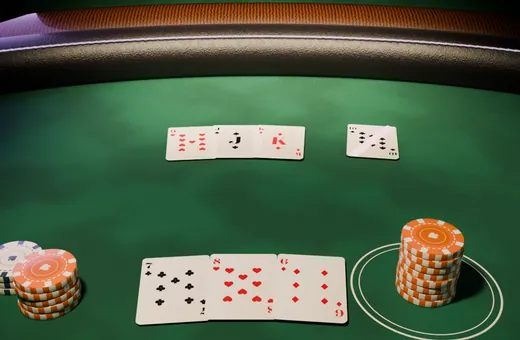
Rule set: Spanish 21, dealer stands on soft 17

Spanish 21: Rules, Bonus Payouts, Strategy and House Edge

Spanish 21 is blackjack played with decks that have the ten-spot cards taken out. The face cards stay and still count ten. The house gives some of that back with rules that favour the player: a 21 always wins, doubled hands can be rescued, and certain 21s earn a bonus. Computed from the rules, the house edge is 0.41% (Spanish 21, dealer stands on soft 17. House edge per starting bet: the average loss per round as a share of the bet placed before the cards are dealt, doubles and splits included in the result. Rules: 6 decks of 48 cards (the ten-spot cards removed), dealer stands on soft 17, dealer checks for blackjack with a hole card, blackjack pays 3:2, double on any number of cards, double after split, split up to 4 hands, aces may be resplit, split aces may be hit, late surrender, a doubled bet may be rescued, a player 21 beats a dealer 21, bonus payouts: 5-card 21 pays 3:2, 6-card 21 pays 2:1, 7-or-more-card 21 pays 3:1, 6-7-8 mixed pays 3:2, 6-7-8 suited pays 2:1, 6-7-8 in spades pays 3:1, 7-7-7 mixed pays 3:2, 7-7-7 suited pays 2:1, 7-7-7 in spades pays 3:1, bonuses are not paid on split hands. The player follows the printed strategy chart for these rules from a full shoe, and never takes insurance or even money.) per starting bet when the dealer stands on soft 17, and 0.81% (Spanish 21, dealer hits soft 17. House edge per starting bet: the average loss per round as a share of the bet placed before the cards are dealt, doubles and splits included in the result. Rules: 6 decks of 48 cards (the ten-spot cards removed), dealer hits soft 17, dealer checks for blackjack with a hole card, blackjack pays 3:2, double on any number of cards, double after split, split up to 4 hands, aces may be resplit, split aces may be hit, late surrender, a doubled bet may be rescued, a player 21 beats a dealer 21, bonus payouts: 5-card 21 pays 3:2, 6-card 21 pays 2:1, 7-or-more-card 21 pays 3:1, 6-7-8 mixed pays 3:2, 6-7-8 suited pays 2:1, 6-7-8 in spades pays 3:1, 7-7-7 mixed pays 3:2, 7-7-7 suited pays 2:1, 7-7-7 in spades pays 3:1, bonuses are not paid on split hands. The player follows the printed strategy chart for these rules from a full shoe, and never takes insurance or even money.) when the dealer hits it.

At a glance

House edge

Headline house edge
0.41%

Spanish 21, dealer stands on soft 17. House edge per starting bet: the average loss per round as a share of the bet placed before the cards are dealt, doubles and splits included in the result. Rules: 6 decks of 48 cards (the ten-spot cards removed), dealer stands on soft 17, dealer checks for blackjack with a hole card, blackjack pays 3:2, double on any number of cards, double after split, split up to 4 hands, aces may be resplit, split aces may be hit, late surrender, a doubled bet may be rescued, a player 21 beats a dealer 21, bonus payouts: 5-card 21 pays 3:2, 6-card 21 pays 2:1, 7-or-more-card 21 pays 3:1, 6-7-8 mixed pays 3:2, 6-7-8 suited pays 2:1, 6-7-8 in spades pays 3:1, 7-7-7 mixed pays 3:2, 7-7-7 suited pays 2:1, 7-7-7 in spades pays 3:1, bonuses are not paid on split hands. The player follows the printed strategy chart for these rules from a full shoe, and never takes insurance or even money.

  • 6 decks of 48
  • Stands on soft 17
  • Blackjack pays 3:2

What Is Spanish 21? The Blackjack Game Without the Ten-Spot Cards

So, what is Spanish 21? It is a blackjack game with its own deck and its own pay rules. Each deck has 48 cards, because the ten of every suit has been removed. Kings, queens and jacks are still in, and each still counts ten. The name says nothing about language or country in any of the rule documents we read, so nothing on this page assumes a link between the two.

You will also hear it called Spanish blackjack, or Spanish 21 blackjack. Those are the same game. Tables use six or eight of these decks, and the regulator texts we cite name both counts.

Is blackjack the same as 21? Not quite. "21" is the target total that every hand is trying to reach. "Blackjack", strictly, is a two-card 21: an ace plus a ten-value card. In Spanish 21 the ten-value cards are the king, queen and jack, which is one rank fewer than in a normal deck, so a natural turns up less often. The rules then give a two-card natural a payout of 3 to 2, and a natural always beats a dealer natural.

Removing the tens is the single change that drives everything else on this page. Fewer big cards means fewer naturals for you, and fewer busts for the dealer. The bonus payouts, the always-winning 21 and the rescue rule are the game's answer: they push some value back toward the player.

Pontoon also plays with 48-card decks. If that interests you, our Pontoon page covers how the British and Australian versions differ. For a wider comparison, the blackjack variants on the homepage sit side by side.

Spanish 21 Rules: How a Round Plays

Here is how to play Spanish 21 from the first chip to the payout. The steps follow the regulator texts named at the end of the page. Where those texts disagree, the difference is stated, because a real table's printed rules decide.

  1. You place one bet before any card is dealt.
  2. You and the dealer each receive two cards. One dealer card is face up.
  3. If the dealer shows an ace or a ten-value card, the dealer may check for a natural, depending on how the table is set up (more on that below).
  4. You act on your hand: hit, stand, double, split or surrender. If you have doubled, you may also rescue.
  5. The dealer draws to a fixed rule and settles the bets.

Play money works the same way, and the table further down this page uses exactly these rules.

The 48-card deck and the dealer#

The tables use six or eight decks of 48 cards. Our reference rules use six. The dealer's soft 17 rule is where the regulators split. The dealer stands on soft 17 in the New Jersey, Pennsylvania, Maryland and Massachusetts texts. The Washington State Gambling Commission approval lets the table be played either way, and the Nevada Gaming Control Board's undated Rules of Play sheet has the dealer hitting soft 17. That is why every edge figure here appears in both forms.

The dealer's second card is handled two ways. The Pennsylvania text requires a card reader at each table, so the dealer can check for a natural on an ace or a ten-value card up. In New Jersey a casino may choose the card reader. Without it, as we read the text, the dealer takes the second card after the players have acted.

Player 21 always wins#

A player 21 beats a dealer 21. Say you draw 5, 9 and 7 for 21, and the dealer builds 4, 8 and 9, also 21. In most blackjack games that is a push. Here you win, and it pays 1 to 1.

There is one exception, and it is a documented range, not a footnote. The New Jersey text says a wager loses if the player has 21 in more than two cards and the dealer has a natural. Two-card naturals are different: a player natural beats a dealer natural in the New Jersey and Washington texts.

Doubling, rescue and surrender#

You may double on any number of cards, not only the first two, and after a split. You draw one card and stop.

Now the odd part. After a double you may rescue: take back the extra wager and forfeit the original bet. The rule applies as long as the doubled hand has not busted. Here is a hand. You hold 6 and 5, eleven, against a dealer 9. You double and draw a 4, for 15. Two bets are now riding on a hand that has to beat a dealer 9, and the chart's after-double table says rescue. Rescuing gives one bet back and loses the other, so you lose one bet rather than risk two. The Nevada sheet limits rescue to totals from 12 to 16, and it is an early undated version. The New Jersey, Pennsylvania and Washington texts do not.

Late surrender is separate. On your first two cards, once the dealer has checked, you may give up half your bet. It is not allowed if the dealer has a natural. Insurance pays 2 to 1, and our figures assume you never take it, or even money.

Splitting and a dealer natural#

You may split equal-valued cards up to four hands. The New Jersey and Massachusetts texts give the limit as three splits. Pennsylvania and Maryland leave the number to the casino's filed rules, and both include aces. Washington and the Nevada sheet state that aces can be re-split. Our reference figures assume aces may be re-split and hit.

A dealer natural is where the no-check version of the game bites. Under the New Jersey text, when the dealer makes a natural against a doubled or split hand, the dealer takes only the original wager, not the extra stake.

Where the rule texts differ#

PointWhat the texts say
Dealer on soft 17Stands: New Jersey, Pennsylvania, Maryland, Massachusetts. Either way: Washington. Hits: the Nevada sheet.
DecksSix or eight: New Jersey, Pennsylvania, Maryland, Massachusetts. Six: the Nevada sheet.
Bonus on a doubled handNot paid: New Jersey, Pennsylvania, Maryland, Washington.
Bonus on a split handNot paid: Pennsylvania, Maryland, Washington. New Jersey excludes only the Super Bonus.
RescueAny hand that has not busted: New Jersey, Pennsylvania. Totals 12 to 16 only: the Nevada sheet.
Re-splitting acesStated as allowed: Washington, the Nevada sheet. Left to the casino's filed rules: Pennsylvania, Maryland.

Spanish 21 Bonus Payouts: 5-Card, 6-7-8 and 7-7-7 Hands

Certain 21s pay more than 1 to 1. This is the feature most players remember about Spanish 21, and it is worth learning the exact shapes. The payouts below are the ones our rules preset carries from the regulator texts.

The bonus payout table#

Bonus handPays
5-card 213 to 2
6-card 212 to 1
7-card 21 or more3 to 1
6-7-8, mixed suits3 to 2
6-7-8, suited2 to 1
6-7-8, in spades3 to 1
7-7-7, mixed suits3 to 2
7-7-7, suited2 to 1
7-7-7, in spades3 to 1

A worked example: you hold 2, 3, 4 and 5, then draw a 7 for exactly 21 in five cards. That pays 3 to 2 on your bet, not 1 to 1. The 6-7-8 and 7-7-7 hands need three cards only, so they are far rarer in practice.

The table follows what the regulators publish. New Jersey states the card-count payouts and the suited hands. Washington gives the mixed-suit rows. If your table posts different odds, the posted table wins.

When a bonus does not pay#

A bonus never pays on a doubled hand. New Jersey, Pennsylvania and Maryland say so, and Washington's text says the same in capitals. Doubling a five-card 21 therefore turns a 3 to 2 win into 1 to 1, and that is the first thing to check before you double a hand with three or four cards.

Splits differ by regulator. The Pennsylvania, Maryland and Washington texts exclude split hands from the bonus. The New Jersey text excludes doubled hands and excludes the Super Bonus on split hands, but does not exclude the ordinary bonuses on splits, and our data offers that as a second option. Our reference figures assume bonuses are not paid on split hands. So the same table can play differently, depending on which jurisdiction approved it.

The Super Bonus and the Envy Bonus#

The Super Bonus is a fixed cash prize, not an odds payout. It goes to a player holding three sevens of one suit against a dealer seven. The New Jersey text sets it at $1,000 for an original wager of $5 or more but under $25, and $5,000 for $25 or more. Washington's text adds an Envy Bonus: each other player at the table receives $50.

Original wagerSuper Bonus
$5 up to but not including $25$1,000
$25 or more$5,000

The fixed cash Super Bonus (three sevens of one suit against a dealer seven) and the envy bonus are not part of any house edge figure: they pay a fixed amount, so their value per bet depends on the bet size. So none of the house edge figures on this page count it.

Spanish 21 vs Blackjack: What You Gain and What the House Takes Back

Spanish 21 vs blackjack is a trade. The house removes the tens, and the player receives extra freedoms in return. Our comparison game is regular blackjack with six decks, the dealer hitting soft 17, doubling after a split, no surrender, and a natural paying 3 to 2. It gives us a fixed point to measure against.

RuleRegular blackjack (comparison rules)Spanish 21 (reference rules)
DeckStandard decks, tens included48-card decks, ten-spot cards removed
Natural pays3 to 23 to 2, and it always beats a dealer natural
Player 21 against dealer 21PushPlayer wins
DoublingFirst two cardsAny number of cards, also after a split
Rescue after a doubleNoneTake back the extra wager, forfeit the original
SurrenderNoneLate surrender, half the bet
SplittingUp to four hands, aces are not re-splitUp to four hands, aces may be re-split and hit
Bonus handsNone5-card, 6-card, 7-card 21, 6-7-8, 7-7-7
Dealer soft 17HitsStands in four regulator texts, hits in others

Most rows favour the player. The deck row is the one that costs. The always-winning 21, the rescue and the bonus hands are what the game adds to make up for it, and the dealer's soft 17 row decides how much of that survives.

Is Spanish 21 better than blackjack?#

Is Spanish 21 better than blackjack? On our numbers it depends on one printed line. Under the reference rules with the dealer standing on soft 17, Spanish 21 costs 0.41% (Spanish 21, dealer stands on soft 17. House edge per starting bet: the average loss per round as a share of the bet placed before the cards are dealt, doubles and splits included in the result. Rules: 6 decks of 48 cards (the ten-spot cards removed), dealer stands on soft 17, dealer checks for blackjack with a hole card, blackjack pays 3:2, double on any number of cards, double after split, split up to 4 hands, aces may be resplit, split aces may be hit, late surrender, a doubled bet may be rescued, a player 21 beats a dealer 21, bonus payouts: 5-card 21 pays 3:2, 6-card 21 pays 2:1, 7-or-more-card 21 pays 3:1, 6-7-8 mixed pays 3:2, 6-7-8 suited pays 2:1, 6-7-8 in spades pays 3:1, 7-7-7 mixed pays 3:2, 7-7-7 suited pays 2:1, 7-7-7 in spades pays 3:1, bonuses are not paid on split hands. The player follows the printed strategy chart for these rules from a full shoe, and never takes insurance or even money.) per starting bet, against 0.62% (Comparison rules: 6 decks, dealer hits soft 17, double after split, blackjack pays 3:2. House edge per starting bet: the average loss per round as a share of the bet placed before the cards are dealt, doubles and splits included in the result. Rules: 6 decks, dealer hits soft 17, dealer checks for blackjack with a hole card, blackjack pays 3:2, double on any first two cards, double after split, split up to 4 hands, aces are not resplit, one card to each split ace, no surrender. The player follows the printed strategy chart for these rules from a full shoe, and never takes insurance or even money.) for the comparison game. That looks like an easy win. It is not a fair fight, though, because the comparison game has the dealer hitting soft 17 and Spanish 21 in that row does not.

Put both games on the same footing, dealer hitting soft 17, and the order flips. Spanish 21 then costs 0.81% (Spanish 21, dealer hits soft 17. House edge per starting bet: the average loss per round as a share of the bet placed before the cards are dealt, doubles and splits included in the result. Rules: 6 decks of 48 cards (the ten-spot cards removed), dealer hits soft 17, dealer checks for blackjack with a hole card, blackjack pays 3:2, double on any number of cards, double after split, split up to 4 hands, aces may be resplit, split aces may be hit, late surrender, a doubled bet may be rescued, a player 21 beats a dealer 21, bonus payouts: 5-card 21 pays 3:2, 6-card 21 pays 2:1, 7-or-more-card 21 pays 3:1, 6-7-8 mixed pays 3:2, 6-7-8 suited pays 2:1, 6-7-8 in spades pays 3:1, 7-7-7 mixed pays 3:2, 7-7-7 suited pays 2:1, 7-7-7 in spades pays 3:1, bonuses are not paid on split hands. The player follows the printed strategy chart for these rules from a full shoe, and never takes insurance or even money.), which is higher than 0.62% (Comparison rules: 6 decks, dealer hits soft 17, double after split, blackjack pays 3:2. House edge per starting bet: the average loss per round as a share of the bet placed before the cards are dealt, doubles and splits included in the result. Rules: 6 decks, dealer hits soft 17, dealer checks for blackjack with a hole card, blackjack pays 3:2, double on any first two cards, double after split, split up to 4 hands, aces are not resplit, one card to each split ace, no surrender. The player follows the printed strategy chart for these rules from a full shoe, and never takes insurance or even money.). So the direct answer is this. A Spanish 21 table where the dealer stands on soft 17 is the cheaper game. One where the dealer hits soft 17 is the dearer game. Read that line of the layout first.

Is Spanish 21 better odds, then? Only on the tables where the rules line up, and only while you keep the bonus rules in mind: they stop paying the moment you double. Free Bet Blackjack makes a different trade, giving free doubles and splits and paying a push on a dealer 22. Our Free Bet Blackjack page shows that one.

Spanish 21 House Edge: Soft 17 Rules and Other Rule Sets

The house edge is the average share of your bet the house keeps over a very long run. Ours is stated per starting bet, meaning the bet you place before any card is dealt, with doubles and splits counted in the result. It is a long-run average and says nothing about tonight's session.

The numbers

House edge by rule set

House edge by rule set
Rule set Per starting bet
Spanish 21, dealer stands on soft 17 6 decks of 48 cards (the ten-spot cards removed), dealer stands on soft 17, dealer checks for blackjack with a hole card, blackjack pays 3:2, double on any number of cards, double after split, split up to 4 hands, aces may be resplit, split aces may be hit, late surrender, a doubled bet may be rescued, a player 21 beats a dealer 21, bonus payouts: 5-card 21 pays 3:2, 6-card 21 pays 2:1, 7-or-more-card 21 pays 3:1, 6-7-8 mixed pays 3:2, 6-7-8 suited pays 2:1, 6-7-8 in spades pays 3:1, 7-7-7 mixed pays 3:2, 7-7-7 suited pays 2:1, 7-7-7 in spades pays 3:1, bonuses are not paid on split hands. 0.41%
Spanish 21, dealer hits soft 17 6 decks of 48 cards (the ten-spot cards removed), dealer hits soft 17, dealer checks for blackjack with a hole card, blackjack pays 3:2, double on any number of cards, double after split, split up to 4 hands, aces may be resplit, split aces may be hit, late surrender, a doubled bet may be rescued, a player 21 beats a dealer 21, bonus payouts: 5-card 21 pays 3:2, 6-card 21 pays 2:1, 7-or-more-card 21 pays 3:1, 6-7-8 mixed pays 3:2, 6-7-8 suited pays 2:1, 6-7-8 in spades pays 3:1, 7-7-7 mixed pays 3:2, 7-7-7 suited pays 2:1, 7-7-7 in spades pays 3:1, bonuses are not paid on split hands. 0.81%
  • Per starting bet: the average loss per round as a share of the bet placed before the cards are dealt. Doubles and splits count in the result, not in the bet.
  • Calculated exactly for these rules by working through the cards left in the shoe: the dealer outcomes are recomputed for every combination of cards already dealt. The strategy followed is the total-dependent chart shown on the page.
  • The fixed cash Super Bonus (three sevens of one suit against a dealer seven) and the envy bonus are not part of any house edge figure: they pay a fixed amount, so their value per bet depends on the bet size.
  • Splits are the one approximation: each split hand is played from the shoe with the dealer up card and the two cards of the original pair removed, ignoring the cards drawn to the other split hands. Hands are resplit whenever the rules allow.

The reference figure is 0.41% (Spanish 21, dealer stands on soft 17. House edge per starting bet: the average loss per round as a share of the bet placed before the cards are dealt, doubles and splits included in the result. Rules: 6 decks of 48 cards (the ten-spot cards removed), dealer stands on soft 17, dealer checks for blackjack with a hole card, blackjack pays 3:2, double on any number of cards, double after split, split up to 4 hands, aces may be resplit, split aces may be hit, late surrender, a doubled bet may be rescued, a player 21 beats a dealer 21, bonus payouts: 5-card 21 pays 3:2, 6-card 21 pays 2:1, 7-or-more-card 21 pays 3:1, 6-7-8 mixed pays 3:2, 6-7-8 suited pays 2:1, 6-7-8 in spades pays 3:1, 7-7-7 mixed pays 3:2, 7-7-7 suited pays 2:1, 7-7-7 in spades pays 3:1, bonuses are not paid on split hands. The player follows the printed strategy chart for these rules from a full shoe, and never takes insurance or even money.), with six decks, the dealer standing on soft 17 and bonuses not paid on split hands. Beside it sits 0.81% (Spanish 21, dealer hits soft 17. House edge per starting bet: the average loss per round as a share of the bet placed before the cards are dealt, doubles and splits included in the result. Rules: 6 decks of 48 cards (the ten-spot cards removed), dealer hits soft 17, dealer checks for blackjack with a hole card, blackjack pays 3:2, double on any number of cards, double after split, split up to 4 hands, aces may be resplit, split aces may be hit, late surrender, a doubled bet may be rescued, a player 21 beats a dealer 21, bonus payouts: 5-card 21 pays 3:2, 6-card 21 pays 2:1, 7-or-more-card 21 pays 3:1, 6-7-8 mixed pays 3:2, 6-7-8 suited pays 2:1, 6-7-8 in spades pays 3:1, 7-7-7 mixed pays 3:2, 7-7-7 suited pays 2:1, 7-7-7 in spades pays 3:1, bonuses are not paid on split hands. The player follows the printed strategy chart for these rules from a full shoe, and never takes insurance or even money.) for the same table with the dealer hitting soft 17. Both assume you follow the chart on this page from a full shoe and never take insurance or even money.

Why the rule set matters#

Four regulator texts (New Jersey, Pennsylvania, Maryland, Massachusetts) have the dealer standing on soft 17, and that is why it is our headline. The Washington approval allows either, and the Nevada sheet has the dealer hitting. So one game, two published figures. When someone quotes a single Spanish 21 house edge, ask which soft 17 rule it assumes.

Bonus rules on split hands are a second difference. Whether they pay after a split changes the game a little, and we say so rather than fold it into one number.

Washington's text also lets a casino offer a "double-double down" at tables where the dealer hits soft 17. That option is not included in the figures here.

Six decks or eight#

Regulator texts allow both counts. Our reference is six. We publish no separate figure for eight decks, so the numbers here are for six.

Calculated exactly for these rules by working through the cards left in the shoe: the dealer outcomes are recomputed for every combination of cards already dealt. The strategy followed is the total-dependent chart shown on the page. Splits are the one approximation: each split hand is played from the shoe with the dealer up card and the two cards of the original pair removed, ignoring the cards drawn to the other split hands. Hands are resplit whenever the rules allow.

Spanish 21 Strategy Chart and Tips: Where It Departs from Blackjack

The full Spanish 21 strategy chart is below. It is built for the dealer standing on soft 17. Cells that change when the dealer hits soft 17 are listed after it. The chart covers first-two-card hard totals, soft totals and pairs, and a separate table for the hand that has just doubled.

Strategy chart

Strategy

36 decisions differ from regular blackjack in the two-card charts.

Spanish 21, dealer stands on soft 17: hard totals, first two cards
Hand, dealer shows Dealer 2Dealer 3Dealer 4Dealer 5Dealer 6Dealer 7Dealer 8Dealer 9Dealer 10Dealer A
Hard 5 Hit Hit Hit Hit Hit Hit Hit Hit Hit Hit
Hard 6 Hit Hit Hit Hit Hit Hit Hit Hit Hit Hit
Hard 7 Hit Hit Hit Hit Hit Hit Hit Hit Hit Hit
Hard 8 Hit Hit Hit Hit Hit Hit Hit Hit Hit Hit
Hard 9 Hit Hit, differs from regular blackjack: regular play is double, or hit if doubling is not allowed Hit, differs from regular blackjack: regular play is double, or hit if doubling is not allowed Hit, differs from regular blackjack: regular play is double, or hit if doubling is not allowed Double, or hit if doubling is not allowed Hit Hit Hit Hit Hit
Hard 10 Double, or hit if doubling is not allowed Double, or hit if doubling is not allowed Double, or hit if doubling is not allowed Double, or hit if doubling is not allowed Double, or hit if doubling is not allowed Double, or hit if doubling is not allowed Double, or hit if doubling is not allowed Hit, differs from regular blackjack: regular play is double, or hit if doubling is not allowed Hit Hit
Hard 11 Double, or hit if doubling is not allowed Double, or hit if doubling is not allowed Double, or hit if doubling is not allowed Double, or hit if doubling is not allowed Double, or hit if doubling is not allowed Double, or hit if doubling is not allowed Double, or hit if doubling is not allowed Double, or hit if doubling is not allowed Double, or hit if doubling is not allowed Double, or hit if doubling is not allowed
Hard 12 Hit Hit Hit, differs from regular blackjack: regular play is stand Hit, differs from regular blackjack: regular play is stand Hit, differs from regular blackjack: regular play is stand Hit Hit Hit Hit Hit
Hard 13 Hit, differs from regular blackjack: regular play is stand Hit, differs from regular blackjack: regular play is stand Hit, differs from regular blackjack: regular play is stand Hit, differs from regular blackjack: regular play is stand Hit, differs from regular blackjack: regular play is stand Hit Hit Hit Hit Hit
Hard 14 Hit, differs from regular blackjack: regular play is stand Hit, differs from regular blackjack: regular play is stand Hit, close call, differs from regular blackjack: regular play is stand Stand Stand Hit Hit Hit Hit Hit
Hard 15 Stand, close call Stand Stand Stand Stand Hit Hit Hit Hit Hit
Hard 16 Stand Stand Stand Stand Stand Hit Hit Hit Hit Hit
Hard 17 Stand Stand Stand Stand Stand Stand Stand Stand Stand Surrender, or hit if surrender is not allowed, differs from regular blackjack: regular play is stand
Hard 18 Stand Stand Stand Stand Stand Stand Stand Stand Stand Stand
Hard 19 Stand Stand Stand Stand Stand Stand Stand Stand Stand Stand
  • H Hit
  • Dh Double, or hit if doubling is not allowed
  • S Stand
  • Rh Surrender, or hit if surrender is not allowed

A dotted rim marks a close call: the next-best play costs very little.

A dark corner mark shows a play that differs from regular blackjack (6 decks, dealer hits soft 17, double after split, blackjack pays 3:2).

Chart for: Spanish 21, dealer stands on soft 17. 6 decks of 48 cards (the ten-spot cards removed), dealer stands on soft 17, dealer checks for blackjack with a hole card, blackjack pays 3:2, double on any number of cards, double after split, split up to 4 hands, aces may be resplit, split aces may be hit, late surrender, a doubled bet may be rescued, a player 21 beats a dealer 21, bonus payouts: 5-card 21 pays 3:2, 6-card 21 pays 2:1, 7-or-more-card 21 pays 3:1, 6-7-8 mixed pays 3:2, 6-7-8 suited pays 2:1, 6-7-8 in spades pays 3:1, 7-7-7 mixed pays 3:2, 7-7-7 suited pays 2:1, 7-7-7 in spades pays 3:1, bonuses are not paid on split hands.

Spanish 21, dealer stands on soft 17: soft totals, first two cards
Hand, dealer shows Dealer 2Dealer 3Dealer 4Dealer 5Dealer 6Dealer 7Dealer 8Dealer 9Dealer 10Dealer A
Soft A,2 Hit Hit Hit Hit, differs from regular blackjack: regular play is double, or hit if doubling is not allowed Hit, differs from regular blackjack: regular play is double, or hit if doubling is not allowed Hit Hit Hit Hit Hit
Soft A,3 Hit Hit Hit Hit, differs from regular blackjack: regular play is double, or hit if doubling is not allowed Hit, differs from regular blackjack: regular play is double, or hit if doubling is not allowed Hit Hit Hit Hit Hit
Soft A,4 Hit Hit Hit, differs from regular blackjack: regular play is double, or hit if doubling is not allowed Hit, differs from regular blackjack: regular play is double, or hit if doubling is not allowed Hit, close call, differs from regular blackjack: regular play is double, or hit if doubling is not allowed Hit Hit Hit Hit Hit
Soft A,5 Hit Hit Hit, differs from regular blackjack: regular play is double, or hit if doubling is not allowed Hit, close call, differs from regular blackjack: regular play is double, or hit if doubling is not allowed Double, or hit if doubling is not allowed Hit Hit Hit Hit Hit
Soft A,6 Hit Hit, differs from regular blackjack: regular play is double, or hit if doubling is not allowed Double, or hit if doubling is not allowed Double, or hit if doubling is not allowed Double, or hit if doubling is not allowed Hit Hit Hit Hit Hit
Soft A,7 Stand, differs from regular blackjack: regular play is double, or stand if doubling is not allowed Stand, differs from regular blackjack: regular play is double, or stand if doubling is not allowed Double, or stand if doubling is not allowed Double, or stand if doubling is not allowed Double, or stand if doubling is not allowed Stand Stand Hit Hit Hit
Soft A,8 Stand Stand Stand Stand Stand, differs from regular blackjack: regular play is double, or stand if doubling is not allowed Stand Stand Stand Stand Stand
Soft A,9 Stand Stand Stand Stand Stand Stand Stand Stand Stand Stand
  • H Hit
  • Dh Double, or hit if doubling is not allowed
  • S Stand
  • Ds Double, or stand if doubling is not allowed

A dotted rim marks a close call: the next-best play costs very little.

A dark corner mark shows a play that differs from regular blackjack (6 decks, dealer hits soft 17, double after split, blackjack pays 3:2).

Spanish 21, dealer stands on soft 17: pairs, first two cards, a pair
Hand, dealer shows Dealer 2Dealer 3Dealer 4Dealer 5Dealer 6Dealer 7Dealer 8Dealer 9Dealer 10Dealer A
2,2 Split, close call Split Split Split Split Split Hit Hit Hit Hit
3,3 Split Split Split Split Split Split Split, differs from regular blackjack: regular play is hit Hit Hit Hit
4,4 Hit Hit Hit Hit, differs from regular blackjack: regular play is split Hit, differs from regular blackjack: regular play is split Hit Hit Hit Hit Hit
5,5 Double, or hit if doubling is not allowed Double, or hit if doubling is not allowed Double, or hit if doubling is not allowed Double, or hit if doubling is not allowed Double, or hit if doubling is not allowed Double, or hit if doubling is not allowed Double, or hit if doubling is not allowed Hit, differs from regular blackjack: regular play is double, or hit if doubling is not allowed Hit Hit
6,6 Hit, differs from regular blackjack: regular play is split Hit, differs from regular blackjack: regular play is split Split Split Split Hit Hit Hit Hit Hit
7,7 Split Split Split Split Split Split Hit Hit Hit Hit
8,8 Split Split Split Split Split Split Split Split Split Split
9,9 Stand, differs from regular blackjack: regular play is split Split Split Split Split Stand Split Split Stand Stand
T,T Stand Stand Stand Stand Stand Stand Stand Stand Stand Stand
A,A Split Split Split Split Split Split Split Split Split Split
  • P Split
  • H Hit
  • Dh Double, or hit if doubling is not allowed
  • S Stand

A dotted rim marks a close call: the next-best play costs very little.

A dark corner mark shows a play that differs from regular blackjack (6 decks, dealer hits soft 17, double after split, blackjack pays 3:2).

Spanish 21, dealer stands on soft 17: after a double, the hand that has doubled and drawn its card
Hand, dealer shows Dealer 2Dealer 3Dealer 4Dealer 5Dealer 6Dealer 7Dealer 8Dealer 9Dealer 10Dealer A
hard 6 Stand Stand Stand Stand Stand Stand Rescue: take back the doubled part of the bet, differs from regular blackjack: regular play is stand Rescue: take back the doubled part of the bet, differs from regular blackjack: regular play is stand Rescue: take back the doubled part of the bet, differs from regular blackjack: regular play is stand Rescue: take back the doubled part of the bet, differs from regular blackjack: regular play is stand
hard 7 Stand Stand Stand Stand Stand Stand Rescue: take back the doubled part of the bet, differs from regular blackjack: regular play is stand Rescue: take back the doubled part of the bet, differs from regular blackjack: regular play is stand Rescue: take back the doubled part of the bet, differs from regular blackjack: regular play is stand Rescue: take back the doubled part of the bet, differs from regular blackjack: regular play is stand
hard 8 Stand Stand Stand Stand Stand Stand Rescue: take back the doubled part of the bet, differs from regular blackjack: regular play is stand Rescue: take back the doubled part of the bet, differs from regular blackjack: regular play is stand Rescue: take back the doubled part of the bet, differs from regular blackjack: regular play is stand Rescue: take back the doubled part of the bet, differs from regular blackjack: regular play is stand
hard 9 Stand Stand Stand Stand Stand Stand Rescue: take back the doubled part of the bet, differs from regular blackjack: regular play is stand Rescue: take back the doubled part of the bet, differs from regular blackjack: regular play is stand Rescue: take back the doubled part of the bet, differs from regular blackjack: regular play is stand Rescue: take back the doubled part of the bet, differs from regular blackjack: regular play is stand
hard 10 Stand Stand Stand Stand Stand Stand Rescue: take back the doubled part of the bet, differs from regular blackjack: regular play is stand Rescue: take back the doubled part of the bet, differs from regular blackjack: regular play is stand Rescue: take back the doubled part of the bet, differs from regular blackjack: regular play is stand Rescue: take back the doubled part of the bet, differs from regular blackjack: regular play is stand
hard 11 Stand Stand Stand Stand Stand Stand Rescue: take back the doubled part of the bet, differs from regular blackjack: regular play is stand Rescue: take back the doubled part of the bet, differs from regular blackjack: regular play is stand Rescue: take back the doubled part of the bet, differs from regular blackjack: regular play is stand Rescue: take back the doubled part of the bet, differs from regular blackjack: regular play is stand
hard 12 Stand Stand Stand Stand Stand Stand Rescue: take back the doubled part of the bet, differs from regular blackjack: regular play is stand Rescue: take back the doubled part of the bet, differs from regular blackjack: regular play is stand Rescue: take back the doubled part of the bet, differs from regular blackjack: regular play is stand Rescue: take back the doubled part of the bet, differs from regular blackjack: regular play is stand
hard 13 Stand Stand Stand Stand Stand Stand Rescue: take back the doubled part of the bet, differs from regular blackjack: regular play is stand Rescue: take back the doubled part of the bet, differs from regular blackjack: regular play is stand Rescue: take back the doubled part of the bet, differs from regular blackjack: regular play is stand Rescue: take back the doubled part of the bet, differs from regular blackjack: regular play is stand
hard 14 Stand Stand Stand Stand Stand Stand Rescue: take back the doubled part of the bet, differs from regular blackjack: regular play is stand Rescue: take back the doubled part of the bet, differs from regular blackjack: regular play is stand Rescue: take back the doubled part of the bet, differs from regular blackjack: regular play is stand Rescue: take back the doubled part of the bet, differs from regular blackjack: regular play is stand
hard 15 Stand Stand Stand Stand Stand Stand Rescue: take back the doubled part of the bet, differs from regular blackjack: regular play is stand Rescue: take back the doubled part of the bet, differs from regular blackjack: regular play is stand Rescue: take back the doubled part of the bet, differs from regular blackjack: regular play is stand Rescue: take back the doubled part of the bet, differs from regular blackjack: regular play is stand
hard 16 Stand Stand Stand Stand Stand Stand Rescue: take back the doubled part of the bet, differs from regular blackjack: regular play is stand Rescue: take back the doubled part of the bet, differs from regular blackjack: regular play is stand Rescue: take back the doubled part of the bet, differs from regular blackjack: regular play is stand Rescue: take back the doubled part of the bet, differs from regular blackjack: regular play is stand
hard 17 Stand Stand Stand Stand Stand Stand Stand Stand Stand Rescue: take back the doubled part of the bet, differs from regular blackjack: regular play is stand
hard 18 Stand Stand Stand Stand Stand Stand Stand Stand Stand Stand
hard 19 Stand Stand Stand Stand Stand Stand Stand Stand Stand Stand
hard 20 Stand Stand Stand Stand Stand Stand Stand Stand Stand Stand
soft 13 Stand Stand Stand Stand Stand Stand Rescue: take back the doubled part of the bet, close call, differs from regular blackjack: regular play is stand Rescue: take back the doubled part of the bet, differs from regular blackjack: regular play is stand Rescue: take back the doubled part of the bet, differs from regular blackjack: regular play is stand Rescue: take back the doubled part of the bet, differs from regular blackjack: regular play is stand
soft 14 Stand Stand Stand Stand Stand Stand Rescue: take back the doubled part of the bet, differs from regular blackjack: regular play is stand Rescue: take back the doubled part of the bet, differs from regular blackjack: regular play is stand Rescue: take back the doubled part of the bet, differs from regular blackjack: regular play is stand Rescue: take back the doubled part of the bet, differs from regular blackjack: regular play is stand
soft 15 Stand Stand Stand Stand Stand Stand Rescue: take back the doubled part of the bet, differs from regular blackjack: regular play is stand Rescue: take back the doubled part of the bet, differs from regular blackjack: regular play is stand Rescue: take back the doubled part of the bet, differs from regular blackjack: regular play is stand Rescue: take back the doubled part of the bet, differs from regular blackjack: regular play is stand
soft 16 Stand Stand Stand Stand Stand Stand Rescue: take back the doubled part of the bet, differs from regular blackjack: regular play is stand Rescue: take back the doubled part of the bet, differs from regular blackjack: regular play is stand Rescue: take back the doubled part of the bet, differs from regular blackjack: regular play is stand Rescue: take back the doubled part of the bet, differs from regular blackjack: regular play is stand
soft 17 Stand Stand Stand Stand Stand Stand Stand Stand Stand Rescue: take back the doubled part of the bet, differs from regular blackjack: regular play is stand
soft 18 Stand Stand Stand Stand Stand Stand Stand Stand Stand Stand
soft 19 Stand Stand Stand Stand Stand Stand Stand Stand Stand Stand
soft 20 Stand Stand Stand Stand Stand Stand Stand Stand Stand Stand
  • S Stand
  • Re Rescue: take back the doubled part of the bet

A dotted rim marks a close call: the next-best play costs very little.

A dark corner mark shows a play that differs from regular blackjack (6 decks, dealer hits soft 17, double after split, blackjack pays 3:2).

The decisions that change most#

This section is where Spanish 21 strategy stops looking like blackjack strategy. Each departure has a reason, and knowing the reason is what makes it stick.

Hard 12 and 13 are hit against every up card. In regular blackjack you stand on a stiff hand against a weak dealer card. Here the tens are gone, so drawing to 12 or 13 busts less often, and the dealer's stiff hands bust less often too. Standing loses its appeal.

Hard 15 and 16 stand against a dealer 2 through 6 and are hit from 7 upward. That is the familiar shape. The 14 line is shorter: it stands only against a 5 or a 6. And hard 17 against an ace is a surrender.

Doubling is narrower. Hard 9 doubles against a 6 only. Hard 10 doubles against 2 through 8. Hard 11 doubles against everything. Soft totals double in a small window: ace-6 and ace-7 against a dealer 4 through 6, and ace-5 against a 6.

Pairs. Eights and aces always split. Fours are never split. Sixes split against 4, 5 and 6 only. Nines split except against 2, 7, ten and ace.

After a double, rescue. With a stiff hand against a dealer 8, 9, ten-value card or ace, the chart rescues the doubled bet. Against a dealer 2 through 7 it stands.

When the dealer hits soft 17, a handful of cells change: hard 14 stands against a 4, hard 16 surrenders against an ace, ace-4 doubles against a 6, ace-5 doubles against a 5, and a pair of eights surrenders against an ace as a close call.

Bonus hands and the doubling trap#

Doubling gives up the bonus, and that is worth seeing on a real hand. You hold 2, 2, 3 and 4: eleven in four cards. A double is legal. If the fifth card is a king, you have a five-card 21, but because you doubled it pays 1 to 1 on both bets, not 3 to 2. Hit instead, and the same king pays 3 to 2 on one bet.

Two bets at 1 to 1 can be worth more than one bet at 3 to 2, so doubling is not automatically a mistake. What it does is close the door on the 6-card and 7-card bonuses, which pay 2 to 1 and 3 to 1 on a hand you could have kept drawing to. Our chart covers the first two cards only. On three or more cards, weigh what the bonus was worth before you double.

A check before you sit down#

Four questions take half a minute and tell you which version of the game you are facing. Does the dealer hit or stand on soft 17? Are bonuses paid on split hands? Is rescue offered on every doubled hand that has not busted, or only on some totals? Does the dealer check for a natural before you act, or take the second card later? Answer those, then pick the chart column for your dealer rule.

The best Spanish 21 tips are the chart's departures from blackjack. Surrender when it says surrender. Rescue when it says rescue. Hit twelve and thirteen.

Play Spanish 21 Online with Play Money

Can you play Spanish 21 online? On this site, yes, with play money. The table below uses the rules on this page, including the 48-card decks, rescue, the bonus hands and the always-winning 21. Nothing is wagered and nothing can be won. If you are learning how to play Spanish 21, that is the safest way to meet rescue and the bonus hands.

Play money

Play at the table

Hand Clinics

Learn the rule in one hand

  • Five-Card 21

    Draw small cards until five of them make twenty-one, and watch it pay as a bonus hand.

    2 min
  • Rescue

    Double down, then take the doubled chips back when the card you drew is a bad one.

    2 min
  • Player 21 Always Wins

    Reach twenty-one and be paid at once, even when the dealer could have matched it.

    2 min

Hand Clinics in words

The clinics, step by step

Five-Card 21

  1. A two and a three against a dealer nine: a weak start. The deck has no tens, and the felt prints what a long hand earns.

    Bonus payouts.Twenty-one made with five cards is paid at the odds printed on the felt, not at even money.

  2. A four arrives: three cards, nine in total. The bonus counts cards, so a long hand is worth building.

    Count the cards.The total must be exactly twenty-one, and the hand must hold five cards or more.

  3. A five makes four cards and fourteen. Standing feels safe, but a long hand may be worth more. Choose, then see what each option is worth.

    Your move.Pick on the table. The numbers come from the exact calculation for this rule set.

  4. A seven makes twenty-one with five cards. It is paid as a bonus hand at once, before the dealer plays.

    Paid at once.The bonus does not wait for the dealer. Use the switch to see the same cards under regular rules.

Rescue

  1. Eleven against a dealer ace. Insurance is on offer before the dealer looks at the hole card.

    Double Down Rescue.After you double, you may take the doubled chips back and give up only your original bet.

  2. Insurance is declined. The dealer checks under the ace and there is no natural, so the hand is yours to play.

    The peek.The dealer checks the hole card under an ace before you act. Rescue only comes into play after you double.

  3. The clinic doubles the eleven. One card comes: a five, so sixteen against an ace. Stand or rescue? Choose, then see what each is worth.

    One card only.A double takes a single card. Rescue is the way out when that card is a poor one.

  4. The clinic rescues the hand. The doubled chips come back and the original bet stays with the dealer.

    What rescue costs.You lose the original bet, not both. Use the switch to see how a double ends without rescue.

Player 21 Always Wins

  1. Five and seven against a dealer nine: twelve. The felt prints that a player twenty-one always wins.

    Twenty-one wins.A player twenty-one beats a dealer twenty-one. At regular blackjack the two would tie.

  2. Twelve against a nine. Hit or stand? Choose, then see what each option is worth.

    Your move.Pick on the table. The numbers come from the exact calculation for this rule set.

  3. A nine makes twenty-one. The hand is settled the moment it reaches twenty-one, and it wins.

    Whatever the dealer holds.The win does not depend on the dealer’s cards, so nothing more has to be dealt.

  4. This hand never needed the dealer. Switch to regular rules to see what the same cards do there.

    Only a player twenty-one.The rule covers a twenty-one you make while playing. A dealer natural is checked before you act.

Real-money Spanish 21 is licensed, and where it is allowed, that is decided place by place. If you want to know whether it is offered near you, ask your local gaming regulator. We name no venues and no operators. A game of chance stays a game of chance: the house edge above is a long-run average, and a session can go either way.

Match the Dealer and Other Spanish 21 Side Bets

A Spanish 21 table can also offer side wagers next to the main bet. Match the Dealer is one: Washington's approved rules include a matching side wager with pay tables written for the 48-card decks, separate from those used at regular blackjack tables. This page prints no edge for it. A side wager sits on top of the main game and is judged on its own.

Where the Spanish 21 Rules Come From

Every rule stated on this page comes from a regulator's published text or an official rule sheet. The list below gives each document, its issuer and the date we read it. Where two texts disagree, we said so in the section above rather than picking one.

Sources

Rule documents

  1. New Jersey Division of Gaming EnforcementN.J.A.C. 13:69F Subchapter 19 Spanish 21 (inside Chapter 69 full-text PDF)Read
  2. Pennsylvania Gaming Control Board58 Pa. Code Chapter 635a Spanish 21Read
  3. Maryland Lottery and Gaming Control AgencyStandard Rules - Spanish 21, MLGCA Version 1.2Read
  4. Washington State Gambling CommissionSP21 Rules & Procedures (AGS), approved Oct 28, 2025Read
  5. Nevada Gaming Control BoardSpanish 21 (Rules of Play)Read
  6. Massachusetts Gaming CommissionRules - Spanish 21 (10-08-2020)Read

Questions

Frequently asked questions

What is Spanish 21?

Spanish 21 is blackjack played with 48-card decks that have the ten-spot cards removed. Kings, queens and jacks stay and count ten. To offset the lost tens, the rules make a player 21 always win, let you rescue a doubled hand and pay bonuses on some 21s. The name does not refer to a language.

What are the rules of Spanish 21?

You bet, receive two cards, and try to beat the dealer without passing 21. You may hit, stand, double on any number of cards, split up to four hands, surrender late and rescue after a double. A player 21 beats a dealer 21. Bonus hands pay extra unless you doubled. The rules section above walks through a full round.

How to play Spanish 21?

Place a bet and get two cards. Take cards until you like your total, or double, split or surrender. If you double, you can rescue by taking back the extra wager and forfeiting the original bet. The dealer draws to a fixed rule. Your 21 always wins, and some 21s pay a bonus. The section on how a round plays covers each step.

Is blackjack the same as 21?

No. Twenty-one is the target total for every hand. Blackjack is a two-card 21, an ace plus a ten-value card. Spanish 21 is a related game with its own deck and rules, where a multi-card 21 still wins but does not always pay 3 to 2.

Is 21 blackjack, or is blackjack 21?

A 21 made with more than two cards is not a natural. In Spanish 21 it still wins, even against a dealer 21, but a natural pays 3 to 2 while an ordinary winning hand pays 1 to 1. Under the New Jersey text, a multi-card 21 loses to a dealer natural.

What is Spanish 21 blackjack, or Spanish blackjack?

Both are other names for Spanish 21. The game is played with 48-card decks and has its own bonus payouts. None of the regulator texts we cite ties the name to a country or a language, so we do not attach a story to it.

How is Spanish 21 different from blackjack?

Three changes stand out. The ten-spot cards are removed, a player 21 always wins, and some 21s pay a bonus. Around them sit later doubling, rescue after a double, late surrender and more generous splitting. The comparison table in this page's Spanish 21 vs blackjack section lists every row.

Is Spanish 21 better than blackjack?

It depends on the soft 17 line. With the dealer standing on soft 17 it costs 0.41% (Spanish 21, dealer stands on soft 17. House edge per starting bet: the average loss per round as a share of the bet placed before the cards are dealt, doubles and splits included in the result. Rules: 6 decks of 48 cards (the ten-spot cards removed), dealer stands on soft 17, dealer checks for blackjack with a hole card, blackjack pays 3:2, double on any number of cards, double after split, split up to 4 hands, aces may be resplit, split aces may be hit, late surrender, a doubled bet may be rescued, a player 21 beats a dealer 21, bonus payouts: 5-card 21 pays 3:2, 6-card 21 pays 2:1, 7-or-more-card 21 pays 3:1, 6-7-8 mixed pays 3:2, 6-7-8 suited pays 2:1, 6-7-8 in spades pays 3:1, 7-7-7 mixed pays 3:2, 7-7-7 suited pays 2:1, 7-7-7 in spades pays 3:1, bonuses are not paid on split hands. The player follows the printed strategy chart for these rules from a full shoe, and never takes insurance or even money.) per starting bet against 0.62% (Comparison rules: 6 decks, dealer hits soft 17, double after split, blackjack pays 3:2. House edge per starting bet: the average loss per round as a share of the bet placed before the cards are dealt, doubles and splits included in the result. Rules: 6 decks, dealer hits soft 17, dealer checks for blackjack with a hole card, blackjack pays 3:2, double on any first two cards, double after split, split up to 4 hands, aces are not resplit, one card to each split ace, no surrender. The player follows the printed strategy chart for these rules from a full shoe, and never takes insurance or even money.) for our comparison rules. With the dealer hitting soft 17 it costs 0.81% (Spanish 21, dealer hits soft 17. House edge per starting bet: the average loss per round as a share of the bet placed before the cards are dealt, doubles and splits included in the result. Rules: 6 decks of 48 cards (the ten-spot cards removed), dealer hits soft 17, dealer checks for blackjack with a hole card, blackjack pays 3:2, double on any number of cards, double after split, split up to 4 hands, aces may be resplit, split aces may be hit, late surrender, a doubled bet may be rescued, a player 21 beats a dealer 21, bonus payouts: 5-card 21 pays 3:2, 6-card 21 pays 2:1, 7-or-more-card 21 pays 3:1, 6-7-8 mixed pays 3:2, 6-7-8 suited pays 2:1, 6-7-8 in spades pays 3:1, 7-7-7 mixed pays 3:2, 7-7-7 suited pays 2:1, 7-7-7 in spades pays 3:1, bonuses are not paid on split hands. The player follows the printed strategy chart for these rules from a full shoe, and never takes insurance or even money.), which is higher. Bonuses also vanish when you double.

Is Spanish 21 better odds?

Only on some tables. Computed from the rules, a table where the dealer stands on soft 17 gives the house 0.41% (Spanish 21, dealer stands on soft 17. House edge per starting bet: the average loss per round as a share of the bet placed before the cards are dealt, doubles and splits included in the result. Rules: 6 decks of 48 cards (the ten-spot cards removed), dealer stands on soft 17, dealer checks for blackjack with a hole card, blackjack pays 3:2, double on any number of cards, double after split, split up to 4 hands, aces may be resplit, split aces may be hit, late surrender, a doubled bet may be rescued, a player 21 beats a dealer 21, bonus payouts: 5-card 21 pays 3:2, 6-card 21 pays 2:1, 7-or-more-card 21 pays 3:1, 6-7-8 mixed pays 3:2, 6-7-8 suited pays 2:1, 6-7-8 in spades pays 3:1, 7-7-7 mixed pays 3:2, 7-7-7 suited pays 2:1, 7-7-7 in spades pays 3:1, bonuses are not paid on split hands. The player follows the printed strategy chart for these rules from a full shoe, and never takes insurance or even money.) per starting bet. Where the dealer hits soft 17 the figure is 0.81% (Spanish 21, dealer hits soft 17. House edge per starting bet: the average loss per round as a share of the bet placed before the cards are dealt, doubles and splits included in the result. Rules: 6 decks of 48 cards (the ten-spot cards removed), dealer hits soft 17, dealer checks for blackjack with a hole card, blackjack pays 3:2, double on any number of cards, double after split, split up to 4 hands, aces may be resplit, split aces may be hit, late surrender, a doubled bet may be rescued, a player 21 beats a dealer 21, bonus payouts: 5-card 21 pays 3:2, 6-card 21 pays 2:1, 7-or-more-card 21 pays 3:1, 6-7-8 mixed pays 3:2, 6-7-8 suited pays 2:1, 6-7-8 in spades pays 3:1, 7-7-7 mixed pays 3:2, 7-7-7 suited pays 2:1, 7-7-7 in spades pays 3:1, bonuses are not paid on split hands. The player follows the printed strategy chart for these rules from a full shoe, and never takes insurance or even money.). Check the layout for the soft 17 line and the bonus rules before comparing.

Can you play Spanish 21 online?

Here you can, with play money: the table on this page uses the same rules. Real-money games are licensed by regulators, so availability depends on where you are. Ask your local gaming regulator. This site names no operators and points to no real-money play.

What is the house edge of Spanish 21?

Computed from the rules, it is 0.41% (Spanish 21, dealer stands on soft 17. House edge per starting bet: the average loss per round as a share of the bet placed before the cards are dealt, doubles and splits included in the result. Rules: 6 decks of 48 cards (the ten-spot cards removed), dealer stands on soft 17, dealer checks for blackjack with a hole card, blackjack pays 3:2, double on any number of cards, double after split, split up to 4 hands, aces may be resplit, split aces may be hit, late surrender, a doubled bet may be rescued, a player 21 beats a dealer 21, bonus payouts: 5-card 21 pays 3:2, 6-card 21 pays 2:1, 7-or-more-card 21 pays 3:1, 6-7-8 mixed pays 3:2, 6-7-8 suited pays 2:1, 6-7-8 in spades pays 3:1, 7-7-7 mixed pays 3:2, 7-7-7 suited pays 2:1, 7-7-7 in spades pays 3:1, bonuses are not paid on split hands. The player follows the printed strategy chart for these rules from a full shoe, and never takes insurance or even money.) per starting bet when the dealer stands on soft 17, and 0.81% (Spanish 21, dealer hits soft 17. House edge per starting bet: the average loss per round as a share of the bet placed before the cards are dealt, doubles and splits included in the result. Rules: 6 decks of 48 cards (the ten-spot cards removed), dealer hits soft 17, dealer checks for blackjack with a hole card, blackjack pays 3:2, double on any number of cards, double after split, split up to 4 hands, aces may be resplit, split aces may be hit, late surrender, a doubled bet may be rescued, a player 21 beats a dealer 21, bonus payouts: 5-card 21 pays 3:2, 6-card 21 pays 2:1, 7-or-more-card 21 pays 3:1, 6-7-8 mixed pays 3:2, 6-7-8 suited pays 2:1, 6-7-8 in spades pays 3:1, 7-7-7 mixed pays 3:2, 7-7-7 suited pays 2:1, 7-7-7 in spades pays 3:1, bonuses are not paid on split hands. The player follows the printed strategy chart for these rules from a full shoe, and never takes insurance or even money.) when the dealer hits. Both use six 48-card decks, bonuses not paid on split hands, and chart play. The fixed cash Super Bonus is excluded.

Does the dealer hit or stand on soft 17 in Spanish 21?

It depends on the regulator and the table. New Jersey, Pennsylvania, Maryland and Massachusetts texts have the dealer standing. Washington allows either, and the Nevada sheet has the dealer hitting. Our reference figure uses standing, with the hitting figure shown beside it.

What is double down rescue?

After you double and draw your card, you may take back the extra wager and forfeit your original bet, provided the hand has not busted. You lose one bet instead of risking two. It is worth using on a weak hand against a strong dealer card, and the chart marks those spots.

Can you surrender in Spanish 21?

Yes. Late surrender is allowed on your first two cards, once the dealer has checked, and you give up half of your bet. If the dealer has a natural, surrender is not available and the bet is lost in full. It is most useful against a dealer ace.

Do bonus hands always pay?

No. A bonus does not pay on a doubled hand, and rules for split hands differ. Pennsylvania, Maryland and Washington exclude split hands, while the New Jersey text excludes doubled hands and the Super Bonus on splits. Check the layout at the table you are looking at.

What is the Super Bonus?

It is a fixed cash prize for three sevens of one suit against a dealer seven. In the New Jersey text it is $1,000 on an original wager from $5 up to under $25, and $5,000 at $25 or more. Fixed cash is not an odds payout, so it sits outside the house edge.

What is the Spanish 21 basic strategy?

It is the chart earlier on this page. Its main departures from blackjack are hitting hard 12 and 13 against every up card, doubling less often, rescuing after doubles and surrendering in a few spots. Bonus hands add one more habit: weigh the bonus before you double on three or more cards.

Does the dealer check for blackjack in Spanish 21?

It depends on the jurisdiction. Pennsylvania requires a card reader so the dealer can check on an ace or ten-value card. In New Jersey a casino may choose one. Without a check, a dealer natural takes only the original wager on doubled and split hands.